
Material-Led Lighting Design: Concrete, Alabaster, and Marble
In lighting, most conversations still begin with output. We often hear questions such as how much it delivers and how efficiently it performs. But in practice, light is never experienced in isolation. It is always shaped by the material it exists within.
This is where the conversation needs to shift.
Concrete, alabaster, and marble are still considered unconventional for lighting in India, even though they are more widely explored globally. Their adoption in the Indian market remains limited because they resist standardisation. They vary in density, translucency, and texture, and these variations are not surface-level; they fundamentally alter how light behaves.
At Abner, this variability is not something we work around. It is something we design with. We believe material is not a carrier of light but an active participant in defining it.
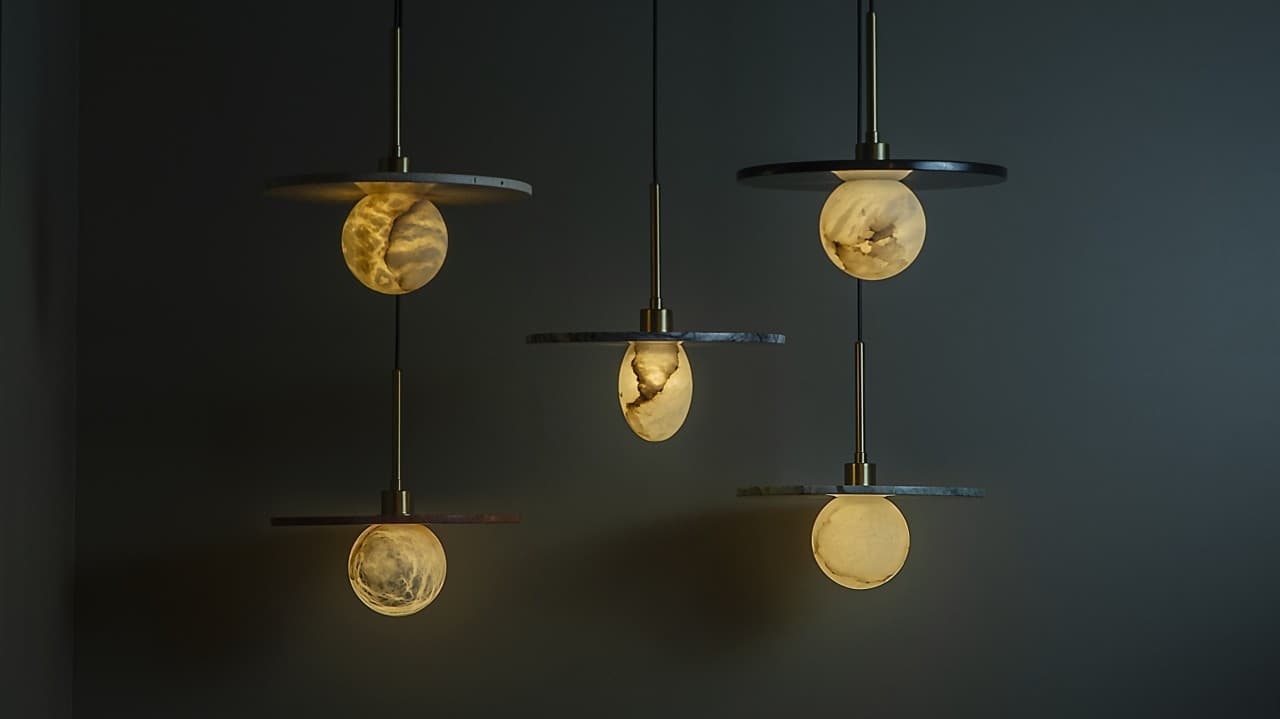
Alabaster, with its natural translucency, allows light to pass through the material itself, softening and diffusing it into a glow that feels embedded rather than applied. Marble behaves differently. Its density holds light at the surface, using its veining to introduce depth, contrast, and visual richness. Concrete, often associated with structure rather than light, absorbs and grounds illumination, reducing glare while introducing a raw, tactile quality that is expressive. Each material sets its own conditions. The role of design is not to override them, but to respond to them.
This becomes even more critical in the Indian context, where climate, usage, and longevity demand a closer integration of engineering and performance. At Abner, this is how we approach both technical and decorative lighting. Material is not applied at the end; it defines the process from the start, guiding how a product performs, ages, and is experienced over time.
Because in the end, lighting is not just about illumination, it is about the experience.